


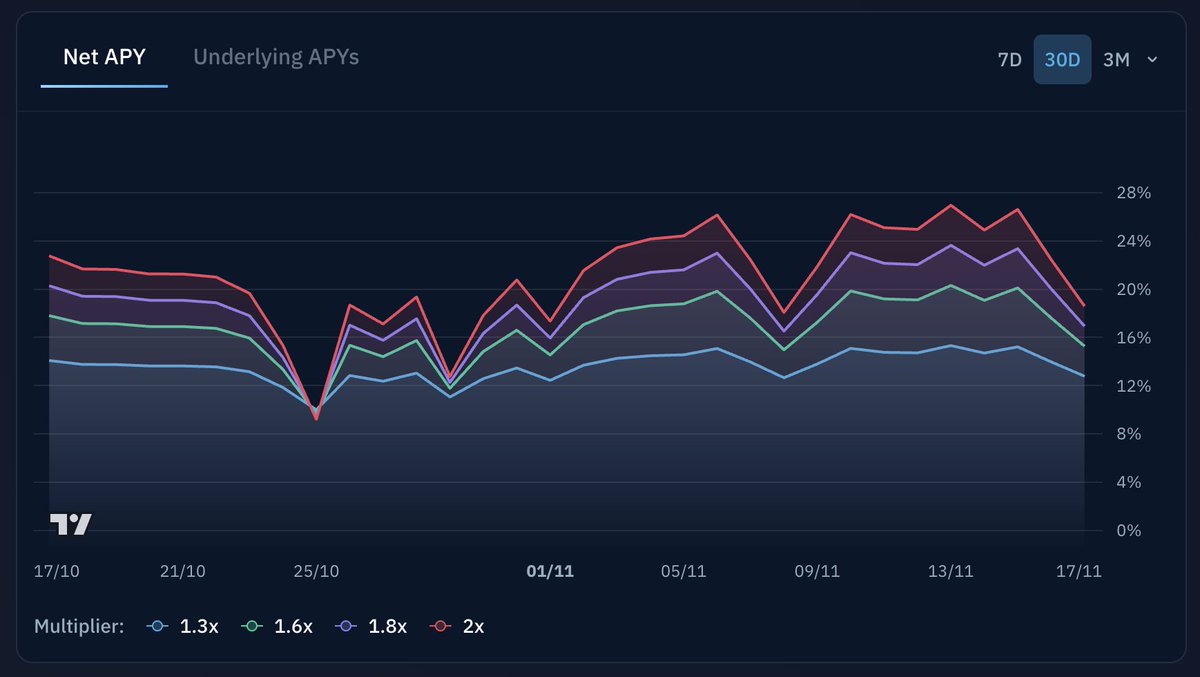
Imagine parking your capital in a pool that earns yields from actual auto insurance premiums and homeowners policies, all settled transparently on the blockchain. In 2025, on-chain reinsurance yields are delivering 6-23% APY, outpacing many traditional fixed-income options while tapping into the stability of real-world insurance flows. This isn’t speculative DeFi hype; it’s reinsurance digitized, where your stake backs genuine risks like fender-benders and hail storms.

The insurance market is ripe for this disruption. U. S. property and casualty insurers posted stronger profitability in the first half of 2025, with net income up 13% despite catastrophe losses, thanks to robust auto results and investment gains. Premium growth may slow to 5%, but the sector’s projected 10% ROE through 2026 signals steady demand for reinsurance. Traditional players like Allstate are layering on aggregate covers, such as their $325 million deal for homeowners risks above a $3.5 billion retention. On-chain platforms step in here, fractionalizing that capital need for everyday investors.
Why Blockchain Unlocks Superior Reinsurance Returns
Traditional reinsurance locks capital in opaque, intermediary-heavy structures, often yielding less after fees. Blockchain reinsurance APY flips this by deploying funds via smart contracts directly to collateralized risks. Platforms like OnRe and Re Protocol pool deposits, earn quarterly premiums from insurers, and distribute yields on-chain. Historical data shows 6-23% APY, compounded by incentives like stablecoin returns or points programs.
Re Protocol’s Q3 2025 shone with a 92% combined ratio and $168.8 million deployed, proving on-chain models can beat legacy players.
This setup thrives on transparency: every premium inflow and claim payout is verifiable, slashing disputes and counterparty risk. Investors gain exposure to real insurance premiums DeFi style, without needing reinsurance expertise.

Breaking Down the Yield Mechanics
Here’s how it works in practice. You deposit stablecoins or yield-bearing assets into a protocol’s pool. That capital underwrites policies via regulated cedents, collecting premiums quarterly. Yields accrue from the spread between premiums and expected claims, plus any protocol boosts. OnRe, Solana-backed and Ethena-integrated, launches products like ONe, blending reinsurance with sUSDe compounding. Re expands to Avalanche, offering institutional-grade pools with rewards.
These aren’t uncollateralized bets; pools are fully backed, mirroring traditional excess-of-loss layers. In a year of moderating cat losses, this yields reliably. Gallagher’s Q2 InsurTech report notes $60.8 billion in funding, fueling such innovations.
On-Chain Reinsurance Platforms Comparison
| Platform | Chain | APY Range | Key Features |
|---|---|---|---|
| OnRe | Solana | 6-23% | Ethena integration, ONe token |
| Re Protocol | Multi-chain (Avalanche+) | 6-23% | 92% combined ratio Q3 2025, $168.8M deployed |
| ONyc | Ethereum | Est. 6-23% | Yield-bearing dollar from premiums |
Real-World Insurance Meets Crypto Efficiency
Consider the P and C sector’s resilience: despite headwinds, profitability climbed on personal auto strength. On-chain reinsurance captures this by tokenizing premium streams, letting you earn stablecoin reinsurance returns 2025 without illiquid LP positions. Re connects institutional capital to collateralized risks, unlocking $134 million in liquidity. OnRe’s structured products merge real-world stability with on-chain upside, backed by heavyweights like RockawayX.
I’ve audited enough smart contracts to know: these protocols minimize smart contract vulnerabilities while maximizing economic alignment. Yields aren’t guaranteed, but the data speaks; 6-23% from verifiable premiums beats treasuries in a low-rate world.
Still, diversification across pools and chains remains key. Platforms like Re Protocol demonstrate resilience, with their multi-chain expansion to Avalanche drawing institutional DeFi players seeking blockchain reinsurance APY without the legacy drag.
Risks and Realities: What Investors Need to Know
Let’s temper enthusiasm with pragmatism. On-chain reinsurance isn’t risk-free paradise. Catastrophe events, like the hail storms battering homeowners claims, can pressure combined ratios. Re Protocol’s 92% Q3 mark is impressive, but outliers happen. Underwriting losses directly hit pool yields, and while premiums from auto and homeowners provide ballast, volatility persists.
Smart contract risks? I’ve pored over audits from these protocols; they’re battle-tested, but no code is bulletproof. Regulatory headwinds loom too, as insurtech funding hits $60.8 billion cumulatively, drawing scrutiny. Yet, regulated on-chain structures, like those unlocking $134 million in liquidity, bridge TradFi and DeFi gaps effectively.
Compare this to traditional reinsurance: locked capital, high minimums, opaque fees eating into 4-8% returns. Here, 6-23% APY shines through quarterly payouts, verifiable on-chain. The edge? Efficiency. Blockchain cuts intermediaries, compounding your stake faster.
Risks and Rewards in On-Chain Reinsurance
| Risk/Reward | Mitigation | Potential Impact |
|---|---|---|
| Catastrophes | Fully collateralized pools | Temporary yield dips |
| Smart contract bugs | Third-party audits (e.g., Re Protocol) | Low probability |
| Regulatory changes | Regulated cedents | Medium-term adjustments |
| Yields | Quarterly premiums and incentives | 6-23% APY historical |
How to Tap Into Real Insurance Premiums DeFi
Getting skin in the game is straightforward. Head to OnRe’s Solana pools or Re’s Avalanche deployments. Deposit USDC, USDe, or yield-bearers like sUSDe into vetted pools. Capital deploys automatically to back policies via smart contracts. Earn premiums quarterly, plus boosts from points programs or token incentives.
OnRe’s ONe token exemplifies this: reinsurance returns layered with Ethena’s stable yields, creating structured products for conservative allocators. Re Protocol rewards long-term holders, blending Re Protocol reinsurance with DeFi composability. Start small, monitor dashboards for combined ratios and TVL, and scale as conviction builds.
Monitor metrics like TVL growth-Re hit $168.8 million deployed-and premium inflows. Tools on these platforms let you track exposure to auto versus homeowners risks, fine-tuning for your risk appetite.
2025 Projections: Scaling Stablecoin Reinsurance Returns
Looking ahead, with P and C ROE steady at 10% and premium deceleration to 4-5%, reinsurance demand holds firm. On-chain adoption accelerates as incumbents like Allstate pile on covers, ceding more to efficient protocols. Expect TVL surges, tighter combined ratios under 95%, and APYs clustering mid-teens as scale kicks in.
Innovations like OnRe’s Ethena tie-ups and Re’s institutional push signal maturation. Insurtech’s funding momentum supports this, positioning on-chain reinsurance yields as a staple for diversified portfolios. Yields from real insurance premiums DeFi could draw billions, rivaling LSTs in accessibility.
ONRE Price Prediction 2026-2031
Projected price ranges for ONRE token driven by on-chain reinsurance yields (6-23% APY) and insurtech growth
| Year | Minimum Price | Average Price | Maximum Price | Avg YoY % Change |
|---|---|---|---|---|
| 2026 | $0.20 | $0.60 | $1.50 | +100% (from 2025 est. $0.30) |
| 2027 | $0.35 | $1.10 | $2.80 | +83% |
| 2028 | $0.60 | $1.90 | $5.00 | +73% |
| 2029 | $1.00 | $3.30 | $8.50 | +74% |
| 2030 | $1.70 | $5.60 | $14.00 | +70% |
| 2031 | $2.80 | $9.50 | $24.00 | +69% |
Price Prediction Summary
ONRE is forecasted to experience strong growth from $0.60 average in 2026 to $9.50 by 2031, fueled by rising reinsurance premiums, stable P&C sector ROE (~10%), and blockchain adoption in insurance. Minimum prices reflect bearish scenarios with regulatory hurdles; maximums assume bull market cycles, institutional inflows, and 20%+ APY yields driving TVL expansion. Overall bullish outlook with 70%+ CAGR potential.
Key Factors Affecting ONRE Price
- P&C premium growth decelerating to 5% in 2025 but stabilizing, boosting reinsurance demand
- On-chain platforms like OnRe and Re Protocol capturing real-world yields (6-23% APY) from auto/homeowners premiums
- Institutional adoption (e.g., Allstate reinsurance deals, Re on Avalanche/Solana)
- Regulatory clarity for DeFi insurance and blockchain transparency reducing risks
- Mitigated cat losses via diversified pools and tech improvements
- Crypto market cycles amplifying token appreciation with TVL growth
- Competition from Re Protocol but ONRE incentives (8-15%) providing edge
- Insurtech funding surge ($60B milestone) supporting ecosystem expansion
Disclaimer: Cryptocurrency price predictions are speculative and based on current market analysis.
Actual prices may vary significantly due to market volatility, regulatory changes, and other factors.
Always do your own research before making investment decisions.
Platforms evolve fast. Multi-chain interoperability means one deposit accesses Solana speed, Avalanche security, Ethereum liquidity. Points programs gamify loyalty, airdrops reward early movers. This convergence of insurance stability and crypto upside redefines yield farming.
From my vantage in DeFi research, on-chain reinsurance stands out for its tangible backing-real premiums, not vaporware. Allocate thoughtfully, diversify exposures, and 2025 could mark your entry into reinsurance’s decentralized future, yielding returns that echo the sector’s enduring strength.
About the Author