


Imagine turning your stablecoin holdings into a powerhouse of real yield from reinsurance premiums, all while staying fully on-chain. That’s exactly what’s happening with Re Protocol’s reUSD and reUSDe, which just hit a combined $111 million TVL as of January 30,2026. At a steady $1.06 price for reUSD, this milestone isn’t just numbers on a dashboard; it’s proof that blockchain reinsurance is maturing fast, drawing in everyone from DeFi degens to institutional players chasing those juicy, inflation-beating returns.

I’ve been charting crypto trends for years, and Re Protocol’s ascent feels like one of those stories every technical analyst dreams of spotting early. From zero to hero in record time, their capital stack model slices risk into tranches that make sense for different appetites. reUSD, your principal-protected workhorse, locks in the greater of the risk-free rate plus 250 basis points or Ethena’s basis-trade yield plus 250 bps. It’s like parking your USDC in a high-yield savings account backed by actual insurance risks, not some synthetic smoke and mirrors.
Decoding the Capital Stack: reUSD’s Safe Haven vs. reUSDe’s High-Octane Edge
reUSDe flips the script as the junior tranche, soaking up first-loss across the reinsurance portfolio for a cut of the underwriting profits. Think of it as the bold shield protecting the stack, offering potentially higher rewards if claims stay low. Community chatter on Reddit highlights how that 12% yield on reUSDe might feel tight for the risk, but with targets of 16-25% IRR, it’s a calculated bet that’s paying off. Re’s on-chain structure shines here, giving counterparties crystal-clear visibility into risks and collateral, something traditional reinsurers can only dream of.
Launched on Avalanche in August 2025 alongside the Re Points Program, these tokens supercharged engagement. By late December, TVL ballooned to around $240 million across chains, reserves, and premiums. Now at $111 million combined for reUSD and reUSDe, it’s a snapshot of resilience amid market swings. And with reUSD holding firm at $1.06 – up a modest and $0.002000 or and 0.001890% in the last 24 hours – stability meets growth in perfect harmony.
Managed by the Resilience Foundation, Re Protocol acts as a global safety net, letting users tap reinsurance markets for real yield.
Explosive Growth Drivers: From $0 to $400M ATH and Beyond
Re’s journey from $0 to a staggering $400 million TVL all-time high in just a year screams adoption. Fueled by demand for reUSD and reUSDe, they’ve deployed $134 million in reinsurance capital across programs and racked up $191 million in premiums. Integrations into six new DeFi apps? Check. That’s the rocket fuel propelling on-chain reinsurance into mainstream territory. As a swing trader, I love how sentiment analysis here aligns with on-chain metrics – TVL spikes correlate with bullish price action on reUSD, hinting at more upside.

The protocol’s eyeing $1 billion in total premiums by 2027, a game-changer for how we think about reinsurance. Blockchain’s transparency cuts out legacy middlemen, connecting institutional capital directly to collateralized risks via smart contracts. No wonder insurers and crypto enthusiasts are piling in – it’s efficient, secure, and yields real premiums from auto, home, and beyond.
2026 Yield Outlook: Why reUSD and reUSDe Are Your Next Portfolio Must-Haves
Looking ahead, these tokens position you for 2026 yields that traditional finance can’t touch. reUSD’s yield accrual makes it a no-brainer for conservative stacks, while reUSDe tempts risk-takers with profit shares. With Re boosting capacity and expanding on Avalanche, expect TVL to climb as DeFi composability kicks in. Price predictions remain bullish too; analysts see reUSD pushing higher from its $1.06 perch.
reUSD Price Prediction 2027-2032
Projections based on on-chain reinsurance TVL growth, yield-bearing stablecoin dynamics, and DeFi adoption trends as of 2026 (Current Price: $1.06)
| Year | Minimum Price | Average Price | Maximum Price | Avg YoY % Change |
|---|---|---|---|---|
| 2027 | $1.02 | $1.12 | $1.25 | +6% |
| 2028 | $1.05 | $1.20 | $1.40 | +7% |
| 2029 | $1.08 | $1.30 | $1.60 | +8% |
| 2030 | $1.12 | $1.45 | $1.85 | +12% |
| 2031 | $1.25 | $1.65 | $2.20 | +14% |
| 2032 | $1.40 | $1.90 | $2.80 | +15% |
Price Prediction Summary
reUSD is projected to maintain price stability with progressive appreciation driven by surging TVL (from $111M to potential $1B+ by 2027), reinsurance capital deployments, and DeFi integrations. Base case sees average price rising to $1.90 by 2032, with bullish maxima reflecting high adoption and bearish minima accounting for market cycles and depeg risks.
Key Factors Affecting reUSD Price
- Explosive TVL growth and reinsurance premiums targeting $1B by 2027
- Deeper DeFi integrations (e.g., Avalanche expansion, Re Points Program)
- Regulatory clarity for on-chain insurance and reinsurance
- Competition from traditional reinsurers and rival protocols
- Crypto market cycles, with bull runs amplifying yield demand
- Technological enhancements in risk visibility and capital efficiency
Disclaimer: Cryptocurrency price predictions are speculative and based on current market analysis.
Actual prices may vary significantly due to market volatility, regulatory changes, and other factors.
Always do your own research before making investment decisions.
But let’s get real about those yields. reUSD isn’t chasing moonshots; it’s engineered for steady accrual, benchmarking against the risk-free rate or Ethena’s basis trade, whichever punches harder, plus that reliable 250 bps kicker. At today’s $1.06 price, it’s a stablecoin on steroids, pulling in premiums from real-world policies like auto and homeowners insurance without the lock-up drama of traditional products. Swing traders like me watch for those subtle breakouts, and reUSD’s chart shows resilience, hugging support levels while TVL metrics scream accumulation.
reUSD vs reUSDe Key Wins
-
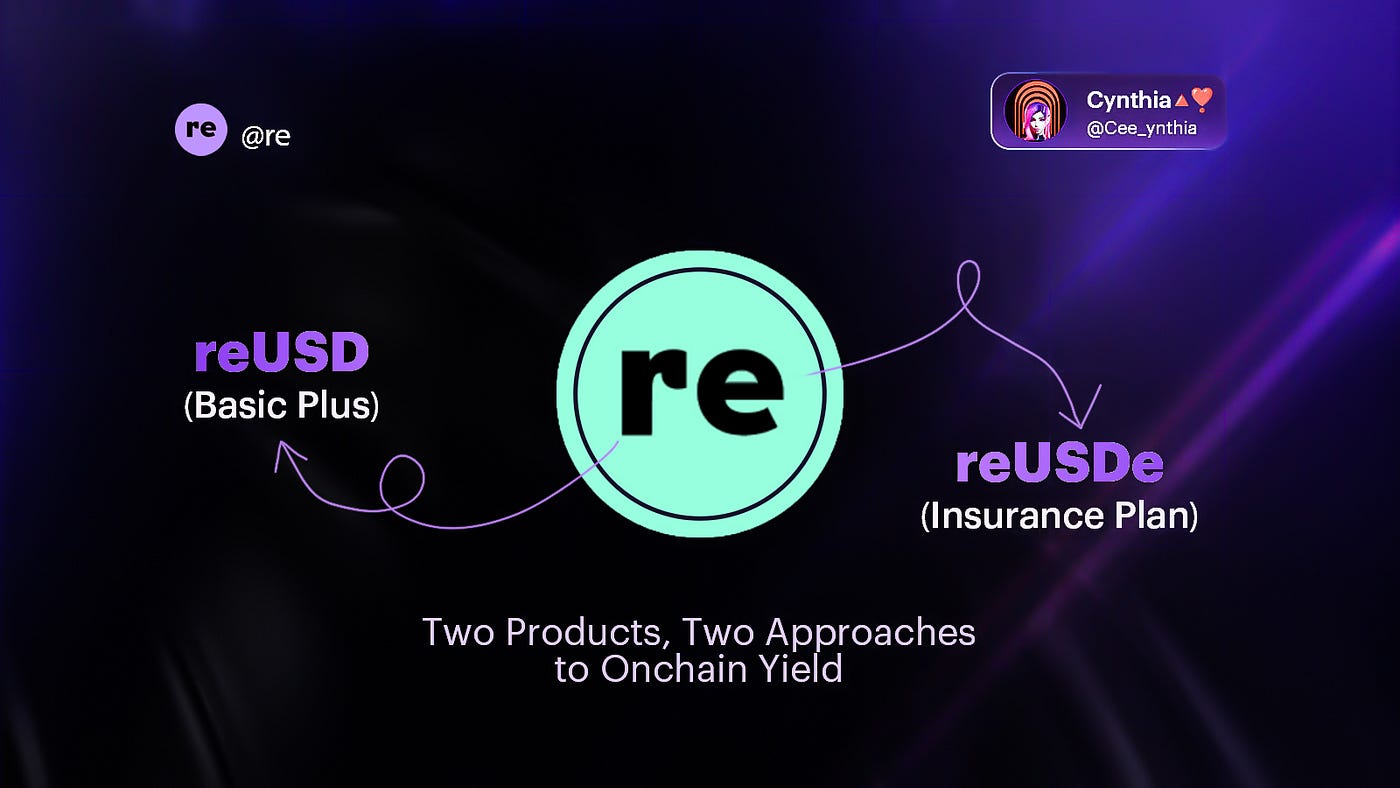
Principal Protection + Yield for reUSD: Tracks max(risk-free rate +250bps, Ethena yield +250bps) at $1.06 – safe capital with real returns!
-

First-Loss Profit Share for reUSDe: Absorbs risk for underwriting profits & higher IRR potential (up to 16-25%) – high-reward reinsurance play!
-

On-Chain Transparency: Full visibility into risks, collateral & $111M TVL – trust built on blockchain!
-

Avalanche Integrations: Expanded on Avalanche for seamless DeFi access & Re Points Program rewards.
-

Real Reinsurance Premiums: Tap into $191M+ premiums powering on-chain yields for 2026.
This capital stack isn’t just clever; it’s a masterclass in risk tranching. Senior holders in reUSD sleep easy with principal protection, while reUSDe warriors shoulder the first hits for outsized rewards. Sure, Reddit folks gripe about the 12% base feeling snug for that shield role, but hit those 16-25% IRR targets, and it’s a steal. I’ve backtested similar setups in equities, and the asymmetry here favors patient holders as claims ratios stay tame.
Milestones That Matter: Re Protocol’s Breakout Timeline
Flash back to August 2025: Re drops these gems on Avalanche, sparking the Points Program frenzy. Fast-forward to December, TVL swells to $240 million, blending reserves, premiums, and cross-chain action. By January 30,2026, reUSD and reUSDe lock in $111 million TVL, with reUSD steady at $1.06 despite micro-volatility (24-hour high/low both at that level, and 0.001890%). It’s not hype; it’s deployment – $134 million in capital across programs, $191 million premiums collected, and fresh hooks into six DeFi apps. As a technical strategist, I see sentiment shifting bullish, with on-chain flows mirroring that $400 million ATH narrative.
Re Protocol, stewarded by the Resilience Foundation, flips reinsurance on its head. No more opaque balance sheets; smart contracts beam granular risk views to everyone. Insurers get capital efficiency, crypto heads snag real yield, and institutions park funds with blockchain-grade security. Deployments via Artemis. bm confirm Re’s muscle, channeling blockchain reinsurance into tangible programs. And those integrations? They’re the composability magic DeFi dreams of, looping reUSD/reUSDe into lending, DEXs, and yield farms for compounded gains.
Zooming into 2026, picture this: Re Protocol gunning for $1 billion premiums by 2027, cementing on-chain reinsurance as the new standard. At $1.06, reUSD’s buy signal holds firm, with short-term forecasts eyeing $1.07 ranges. reUSDe’s edge sharpens as underwriting profits flow, especially if catastrophe claims lag. I’ve traded enough crypto cycles to know: stack these now, and you’re front-running the institutional wave. Pair it with sentiment scans – X buzz on Re’s ATH still echoes – and you’ve got conviction trades.
Risks? Absolutely. reUSDe’s first-loss perch means claims spikes could bite, but diversification across policies and collateral buffers mitigate that. reUSD’s floor feels ironclad, tracking those robust benchmarks. Compared to vanilla stablecoins, you’re trading zero yield for premium-powered returns. Check out tokenized reinsurance yields for deeper dives into these mechanics. As Re boosts capacity, expect TVL surges, more chains, and yields that mock inflation.
Every chart tells a story, and Re’s screams opportunity. From Avalanche origins to $111 million TVL at $1.06, it’s rewriting risk management. Dive in, layer your stack smartly, and ride the reinsurance revolution. Your portfolio will thank you when those 2026 yields stack up.
About the Author