
What crypto reinsurance means in 2026
Crypto reinsurance is the application of traditional risk transfer mechanisms to decentralized finance protocols. It involves specialized entities or pools assuming a portion of the underwriting risk for smart contract vulnerabilities, liquidity pool insolvency, or oracle failures. In 2026, this sector has evolved from experimental coverage to a structural necessity for protocol solvency.
The defining shift in 2026 is the integration of artificial intelligence into the underwriting process. Traditional reinsurance relies on historical actuarial tables that lag behind the velocity of blockchain innovation. Modern crypto reinsurance models ingest real-time on-chain telemetry—such as transaction patterns, gas usage, and liquidity depth—to predict risk exposure dynamically. This allows for pricing that reflects current network conditions rather than static historical averages.
Traditional reinsurance relies on historical actuarial data; crypto reinsurance 2026 integrates real-time on-chain telemetry and AI predictive modeling.
Platforms like Re have begun authorizing significant capital capacity for these programs, signaling institutional confidence in the model. However, misconceptions persist. Crypto reinsurance does not eliminate smart contract risk; it merely transfers the financial consequence of that risk to a broader pool of capital. Understanding this distinction is critical for developers and users alike.
AI risk modeling for protocol solvency
Static underwriting models struggle with crypto assets because they rely on historical averages that ignore tail-risk events and compositional vulnerabilities. AI risk modeling addresses this by analyzing smart contract code and real-time market volatility to price risk more accurately. This dynamic approach ensures protocol solvency by identifying liquidity gaps and attack vectors before they trigger systemic failure.
Traditional insurers treat crypto as a high-variance asset class, often leading to capital misallocation or coverage gaps. AI models, however, process on-chain data to simulate thousands of attack scenarios. They evaluate the interaction between smart contract logic and market conditions, such as oracle manipulation or flash loan exploits. This granular analysis allows for precise capital reserves that reflect the actual risk profile of each protocol.
The shift from static to dynamic risk assessment is critical for long-term solvency. As Swiss Re noted in their SONAR 2022 report, crypto assets can lead to unexpected losses under traditional underwriting perspectives because standard models fail to capture the unique structural risks of decentralized finance.
Market volatility and liquidity
AI models continuously monitor liquidity depth and price impact to adjust risk parameters in real time. This is essential for protocols that rely on stablecoin reserves or leveraged positions. A sudden market downturn can drain liquidity faster than static models predict, leading to insolvency.
The chart above illustrates the volatility AI models must account for. Sudden spikes in volume and price deviation trigger automated risk responses. Without this real-time feedback loop, protocols cannot maintain adequate solvency ratios during market stress.
Misconceptions about AI accuracy
A common misconception is that AI guarantees zero losses. While AI significantly reduces risk, it cannot eliminate smart contract bugs or black swan events. Instead, it provides a probabilistic framework for capital allocation. This transparency allows investors to understand the risk-adjusted returns of insured protocols.
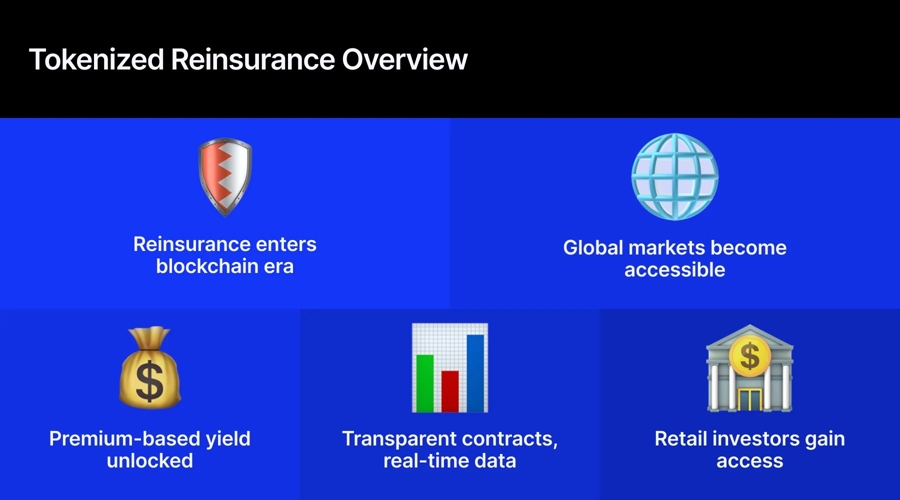
Tokenized capacity and market growth
Tokenized reinsurance transforms traditional capital markets by converting reinsurance capacity into on-chain assets. This mechanism allows institutional investors to allocate funds directly to protocol solvency pools, replacing slow, paper-based treaty processes with instant, transparent liquidity. The primary keyword cluster—crypto reinsurance and protocol solvency—is addressed here through the lens of market infrastructure rather than speculative trading.
Re Protocol recently demonstrated the scale of this shift by authorizing $134 million in reinsurance capacity for 2026 renewals. This deployment, verified by industry reports from Artemis.bm, shows how decentralized infrastructure can match the volume of legacy reinsurers. The capital is distributed across multiple programs, ensuring that smart contract risks are backed by sufficient, verifiable reserves rather than theoretical promises.
The RE token serves as the governance mechanism for this capital, allowing holders to vote on risk parameters and capacity allocation. Unlike standard utility tokens, RE functions as a claim on the underlying reinsurance pool, aligning investor incentives with the long-term stability of the protocols they support. This structure reduces the counterparty risk that has historically plagued crypto insurance markets.
A common misconception is that tokenized capacity is merely a marketing wrapper for traditional insurance. In reality, the on-chain nature of these pools allows for real-time auditing of solvency ratios. Investors can verify that the $134 million in capacity is fully reserved and available for claims, eliminating the opacity that often leads to market failures in traditional reinsurance.
This transparency is critical for 2026 market growth. As more protocols adopt tokenized reinsurance, the liquidity of these capital pools will deepen, allowing for more complex risk models and lower premiums for end-users. The market is moving from experimental pilots to institutional-grade infrastructure, where capital efficiency and solvency are measured in real-time.
Comparing traditional vs. on-chain reinsurance
Legacy reinsurance operates on a foundation of delayed settlements and fragmented data silos. Traditional models rely on manual audits, bilateral contracts, and quarterly reporting cycles that often lag behind real-time risk exposure. This friction creates a capital efficiency gap where trillions in capital remain idle, tied up in clearing processes and verification delays.
On-chain reinsurance, by contrast, leverages smart contracts and tokenized assets to automate claims and settlement. By anchoring data to verifiable oracles and executing payouts programmatically, protocols reduce settlement times from months to minutes. This shift not only improves capital turnover but also enhances transparency, allowing reinsurers to monitor risk exposure in real-time rather than reacting to historical reports.
The following table outlines the structural differences between these two models, highlighting the impact on speed, trust, and capital utilization.
| Metric | Traditional Reinsurance | On-Chain Reinsurance |
|---|---|---|
| Settlement Time | 3-6 months | Minutes to hours |
| Data Transparency | Limited, quarterly reports | Real-time, on-chain oracles |
| Capital Efficiency | Low, high idle capital | High, automated liquidity |
| Trust Model | Counterparty risk | Code and protocol risk |
| Audit Frequency | Annual or ad-hoc | Continuous, automated |
Key questions about crypto reinsurance
The intersection of traditional risk transfer and decentralized finance is evolving rapidly. As AI models begin to underwrite protocol solvency, the market is shifting from speculative coverage to data-driven resilience. Understanding the current costs, regulatory landscape, and future outlook is essential for protocol developers and institutional investors.
These questions reflect the broader transition toward verifiable security. As the market matures, the focus shifts from covering hacks to ensuring ongoing solvency through algorithmic guarantees.
No comments yet. Be the first to share your thoughts!