
Get crypto reinsurance 2026 right
Before deploying AI-driven risk models, you must verify the foundational data feeds and counterparty solvency. Crypto reinsurance in 2026 is not just about coverage; it is about the reliability of the oracle networks feeding those models. If your data sources are fragmented or biased, your AI risk assessment will fail when volatility spikes.
Start by auditing your data infrastructure. Ensure your AI models ingest real-time on-chain data from multiple independent oracles to prevent single-point failures. Next, review your counterparty agreements. With global reinsurers facing reduced risk-adjusted prices, verify that your reinsurance partners have the liquidity to pay out during extreme market events. Finally, test your smart contract integration. Simulate failure scenarios to ensure that claims processing triggers correctly without manual intervention, which can introduce delays or errors during a crisis.
-
Verify multi-source oracle feeds for AI data inputs
-
Confirm counterparty liquidity and solvency ratings
-
Simulate smart contract claim triggers under stress
Work through the steps
Implementing crypto reinsurance requires aligning on-chain data with traditional actuarial models. You must ensure that smart contracts accurately reflect risk parameters before capital is deployed. This section walks through the operational workflow for structuring a reinsurance program.

Identify the specific protocols or assets requiring protection. Determine if the coverage targets smart contract failure, oracle manipulation, or custodial risk. Set clear monetary caps to prevent overexposure, ensuring the reinsurance layer matches the underlying protocol’s total value locked (TVL) thresholds.

Deploy machine learning models to analyze historical blockchain data and predict potential vulnerabilities. These tools process on-chain metrics to identify anomalies in real-time. Use these insights to adjust premium rates dynamically, reflecting the current security posture of the protocol rather than static historical averages.
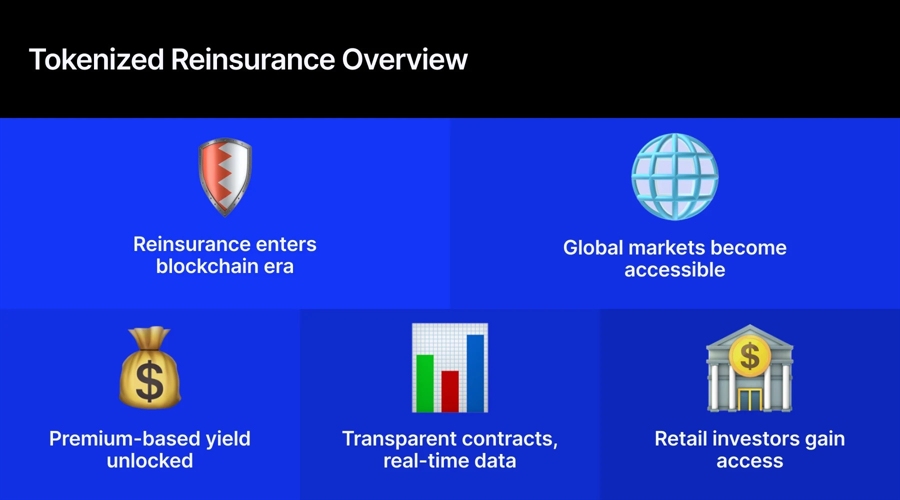
Encode the reinsurance terms into self-executing smart contracts. Define the trigger conditions for claims, such as confirmed hack events or oracle price deviations. Ensure the contract includes clear dispute resolution mechanisms and automated payout functions to minimize administrative friction during a crisis event.
Lock the necessary capital in a multi-signature wallet or dedicated reserve contract. Verify that the available capacity meets the defined coverage limits. Recent industry moves, such as Re’s authorization of $134 million in capacity for 2026 renewals, demonstrate the need for substantial, verified liquidity to support large-scale DeFi protocols.
Establish a continuous monitoring system to track the protocol’s health against the modeled risk parameters. Perform regular third-party audits of the smart contracts to ensure no new vulnerabilities have emerged. Adjust the risk model inputs based on real-world performance data to maintain accurate pricing and coverage adequacy over time.
Common Mistakes in Crypto Reinsurance
Even with AI-driven risk modeling, DeFi protocols and traditional reinsurers often stumble on execution. The gap between theoretical coverage and actual payout reliability usually stems from three specific errors. Fixing these requires shifting focus from marketing claims to technical and contractual rigor.
Misaligned Data Feeds
AI models are only as good as their input data. A frequent mistake is relying on unverified or delayed price oracles for loss triggers. If the oracle lags during a flash crash or market manipulation event, the protocol may fail to trigger a reinsurance payout when it should, or worse, pay out on false data. Always audit the latency and source integrity of every data feed feeding your risk engine. Use multiple independent oracles to cross-verify critical loss events before triggering any settlement.
Over-Reliance on Automated Logic
Smart contract code is immutable, but market conditions are not. Teams often mistake "code is law" for "code is complete." This leads to gaps when novel attack vectors emerge that weren't in the original threat model. AI can predict probabilities, but it cannot anticipate every unique exploit. Maintain a manual override protocol or a governance layer that can pause payouts during anomalous market behavior. Regular third-party audits of the AI model's decision logic are as important as auditing the smart contracts themselves.
Ignoring Correlation Risk
Traditional reinsurance spreads risk across uncorrelated events. In crypto, assets are highly correlated. A hack on a major lending protocol often triggers a liquidity crisis across the entire ecosystem. Assuming diversification reduces risk in a correlated market is a fatal error. Stress-test your models against systemic shocks, not just isolated incidents. Ensure your reinsurance capacity is sufficient to handle simultaneous losses across multiple protocols, not just single-point failures.
Crypto reinsurance 2026: what to check next
Crypto reinsurance 2026 questions often stem from confusion between traditional coverage models and decentralized alternatives. As the market matures, the distinction between direct crypto insurance and the reinsurance layers that support it becomes critical for protocol developers and investors.
Is there any insurance for cryptocurrency?
Unlike traditional policies covering physical assets, crypto insurance targets blockchain-specific risks. These include cyber threats, internal fraud, private key loss, and operational vulnerabilities. Coverage is typically structured to protect custodians or protocols against specific smart contract failures rather than general market fluctuations.
What is the outlook for Fitch reinsurance in 2026?
Global reinsurers are expected to see profitability decline in 2026, though earnings will remain at sound levels, according to Fitch Ratings. The ratings agency noted that Jan. 1 contract renewals confirmed further reductions in risk-adjusted prices across most lines. This pricing pressure may increase competition for decentralized reinsurance platforms seeking to fill capacity gaps.
Do insurance companies invest in crypto?
While the growing crypto market offers potential investment opportunities, cryptocurrencies remain atypical for U.S. insurers due to extreme price volatility and speculative nature. Most traditional carriers view crypto exposure as a high-risk asset class, preferring to focus on underwriting insurance products rather than holding digital assets on their balance sheets.
How does AI-driven modeling stabilize DeFi protocols?
AI-driven risk modeling allows crypto reinsurance 2026 platforms to process real-time on-chain data for faster, more accurate pricing. By analyzing historical exploit patterns and current network states, these models help stabilize DeFi protocols by providing dynamic coverage limits that adjust to immediate risk levels, reducing the likelihood of undercapitalized pools.
No comments yet. Be the first to share your thoughts!