

Market capacity expands for 2026
The scale of onchain capital has shifted from experimental pilots to serious infrastructure. Ahead of the January 2026 renewal cycle, blockchain-native reinsurer Re has authorized $134 million in reinsurance capacity across multiple programs. This deployment marks a significant expansion of available capital, signaling that decentralized risk transfer is moving into a phase of sustained, large-scale operation.
This influx of liquidity addresses a critical bottleneck in decentralized finance: the availability of affordable protection. By pooling capital from diverse onchain sources, platforms like Re provide primary insurers and protocols with the backing needed to underwrite complex risks. The $134 million figure is not just a number; it represents a tangible floor of support that allows DeFi projects to stabilize their balance sheets against smart contract failures, oracle manipulations, and other systemic threats.
The expansion of capacity also reflects growing confidence from traditional and crypto-native capital providers. As regulatory clarity improves and risk models mature, institutional players are increasingly willing to allocate funds to onchain insurance products. This trend is expected to continue throughout 2026, with more capital flowing into protocols that demonstrate robust risk management and transparent governance.
To understand the market sentiment surrounding this growth, it is useful to look at the performance of key players in the sector. The following chart illustrates the recent price action of a relevant DeFi insurance token, reflecting investor interest in the broader narrative of onchain risk transfer.
Key protocols driving adoption
The bridge between traditional risk capital and decentralized finance is being built by a specific set of protocols. These platforms do not merely speculate on crypto assets; they tokenize the reinsurance process itself, allowing institutional capital to earn yield while providing stability to DeFi protocols. Two names dominate this emerging infrastructure layer: Re and OnRe.
Re: Institutional-Grade Capacity
Re has positioned itself as the primary onchain reinsurance infrastructure, focusing on high-compliance, institutional-grade solutions. The protocol recently authorized $134 million in reinsurance capacity for 2026 renewals, signaling a significant scaling of its operational reach. This capacity is not speculative; it is backed by strategic investments from major venture firms like Coinbase Ventures, which validates the model for traditional carriers. By connecting real-world reinsurance capital to onchain liquidity, Re allows primary insurers to offload risk efficiently while offering crypto-native yield to investors.
OnRe: Yield from Real-World Assets
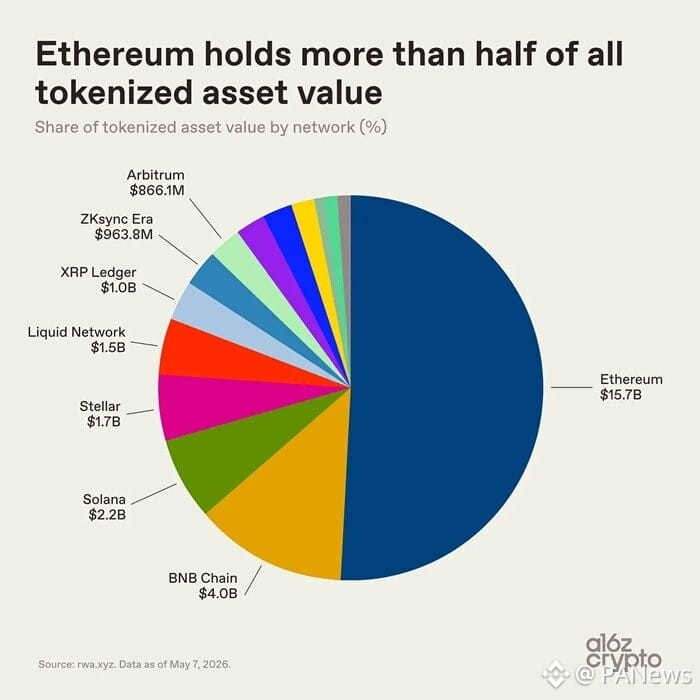
While Re focuses on the infrastructure layer, OnRe brings the $850 billion reinsurance market directly onto Solana. OnRe’s model, often referred to as ONyc, delivers 9–15% real-world yield by tokenizing regulated reinsurance contracts. This approach offers a different value proposition: it provides DeFi users with stable, asset-backed returns derived from the traditional insurance market rather than volatile token emissions. OnRe’s integration into the Solana ecosystem highlights how different blockchains are adopting reinsurance as a utility for capital efficiency.
Protocol Comparison
Understanding the distinction between these two approaches helps clarify how crypto reinsurance is stabilizing DeFi. Re acts as the connective tissue for institutional capital, while OnRe provides the yield-bearing instrument for onchain investors.
| Protocol | Primary Chain | Yield Source | Target Capital |
|---|---|---|---|
| Re | Multi-chain | Reinsurance capacity fees | Institutional & Venture |
| OnRe | Solana | Regulated reinsurance contracts | DeFi & Retail |
Regulatory clarity and institutional trust
The shift from speculative DeFi to compliant risk transfer hinges on regulatory clarity. In 2026, frameworks are no longer vague guidelines but structured pathways that allow traditional capital to flow onchain. This transition is driven by the need for transparency and auditability, features that blockchain inherently provides but that regulators demand.
The Reinsurance Association of America’s September 2026 event agenda signals this convergence. The industry is moving beyond theoretical discussions to practical implementation, focusing on how onchain protocols can integrate with existing reinsurance transactions. This structural alignment is what enables institutional participation at scale.
A key indicator of this maturity is Coinbase Ventures’ strategic investment in Re, an onchain protocol connecting real-world reinsurance capital. This move validates the infrastructure, signaling that major financial players see onchain reinsurance as a viable, compliant channel for risk management rather than a speculative experiment. It bridges the gap between Web2 insurance standards and Web3 execution.
Blockchain’s ability to allow primary insurers, reinsurers, and regulators to share data securely in real-time is central to this trust. Automated compliance checks and risk modeling reduce the friction that has historically slowed adoption. The result is a system where capital stabilizes DeFi not through speculation, but through verified, compliant risk transfer.
Real-world yield meets onchain risk
The reinsurance market is a $850 billion engine that stabilizes global insurance, yet it has remained largely opaque and slow to settle. Onchain protocols are now tokenizing this traditional yield, bringing the 9–15% returns typical of reinsurance capital into decentralized finance. This creates a direct bridge between regulated real-world assets and crypto investors seeking stable, non-correlated returns.
By moving reinsurance capital onchain, protocols reduce the friction of cross-border settlements and improve transparency for risk modeling. Primary insurers, reinsurers, and regulators can share data securely in real time, automating compliance and audit checks that previously took weeks. For crypto investors, this means access to institutional-grade yield that is backed by tangible risk transfer rather than speculative tokenomics.
This new asset class does not replace traditional insurance but complements it by providing deeper liquidity pools for risk. As blockchain infrastructure matures, the integration of onchain capital into reinsurance structures offers a more resilient framework for both the insurance industry and the broader DeFi ecosystem.
No comments yet. Be the first to share your thoughts!