
Tokenized reinsurance capacity hits $134 million
Blockchain reinsurance platform Re has authorized $134 million in reinsurance capacity across multiple programs ahead of the 2026 renewals cycle. This deployment signals a tangible shift in how digital asset risks are underwritten, moving beyond experimental pilots to substantial capital allocation.
The move underscores the growing institutional appetite for on-chain risk transfer mechanisms. By leveraging decentralized infrastructure, Re is positioning itself as a critical liquidity provider for crypto-native insurers who struggle to find adequate coverage in traditional markets. This capacity boost is not merely symbolic; it represents real capital ready to absorb losses in the volatile DePIN and broader digital asset sectors.
Market sentiment toward this development is reflected in the performance of the RE token. Investors are closely watching how this capital deployment translates into actual underwriting volume and loss ratios. The following widget provides the current live price for the RE token, offering a real-time pulse on market confidence in this model.
Traditional reinsurance markets are also entering 2026 with robust capacity. According to AM Best’s 2026 Market Segment Outlook, traditional dedicated reinsurance capital is projected at approximately $540 billion, bolstered by a third consecutive year of strong earnings. This backdrop creates a competitive yet complementary environment where on-chain solutions can carve out specific niches that legacy carriers have historically ignored or underserved.
Why DePIN networks need on-chain risk transfer
Decentralized Physical Infrastructure Networks (DePIN) operate at a velocity that legacy insurance markets cannot match. Traditional underwriting cycles span months, involving manual due diligence and static actuarial tables. DePIN deployment happens in weeks, with hardware rolling out globally and compute capacity fluctuating in real-time. This structural mismatch leaves a massive gap in coverage, forcing network operators to self-insure or risk catastrophic insolvency when node failures occur.
The problem is not just speed; it is capital inefficiency. Traditional reinsurance capital is gated behind slow settlement processes and opaque claims verification. As noted by industry analysts, blockchain technology offers unprecedented transparency, allowing risk to be priced and transferred instantly. However, the volume of on-chain capital available for this specific niche remains underutilized because the mechanisms for trustless verification have only recently matured.
Crypto reinsurance 2026 emerges as the solution to this friction. By leveraging stablecoins and smart contracts, capital can be deployed immediately to cover specific risks, such as hardware theft or connectivity loss. This approach transforms reinsurance from a passive, post-loss reimbursement model into an active, real-time risk management tool. The result is a capital-efficient ecosystem where premiums are paid instantly, and claims are settled automatically based on verified on-chain data.
Smart contract liability and compute guarantees
Crypto reinsurance in 2026 moves beyond static policy documents into executable code. In decentralized physical infrastructure networks (DePIN), risk is no longer assessed through manual claims processing but through smart contracts that automate liability and payouts. These contracts serve as the underwriting engine, directly linking node performance data to financial settlements. When a node fails to deliver compute power, the smart contract verifies the breach and triggers a claim instantly, removing the administrative lag that traditionally bloats reinsurance costs.
The coverage mechanisms are specific to the nature of digital infrastructure failures. For node downtime, oracles act as the trusted feeders of truth, broadcasting uptime status to the blockchain. If an oracle reports a node as offline for a duration exceeding the agreed threshold, the smart contract automatically deducts the corresponding staked collateral or releases insurance funds to the affected party. This automation ensures that liability is assigned based on verifiable data rather than disputed invoices, a standard that traditional reinsurance frameworks have struggled to replicate at scale.
Hardware failure and oracle manipulation present distinct challenges that smart contracts address through predefined parameters. In AI compute markets, where hardware degradation can silently corrupt model training, coverage is often tied to performance benchmarks rather than simple on/off states. Smart contracts can verify that a node has produced valid computational outputs. If an oracle is manipulated to falsify this data, the smart contract’s logic—often backed by decentralized oracle networks like Chainlink—detects the anomaly through consensus mechanisms. This prevents fraudulent claims while ensuring that legitimate hardware failures are compensated without human intervention.
The integration of these automated systems allows crypto reinsurance to operate with a transparency that legacy markets cannot match. By embedding liability clauses directly into the code that governs the infrastructure, the risk is priced dynamically. This shift from retrospective indemnification to prospective, code-enforced guarantees is the defining feature of crypto reinsurance in 2026, creating a more resilient market for digital assets and physical infrastructure alike.
Comparing traditional vs. on-chain reinsurance models
The structural divergence between legacy reinsurance and 2026 crypto reinsurance models centers on capital deployment speed and settlement transparency. Traditional carriers rely on bilateral contracts and periodic reporting, whereas on-chain protocols utilize smart contracts to automate risk transfer. This shift reduces counterparty risk and eliminates the lag inherent in traditional claims processing.
| Feature | Traditional Reinsurance | On-Chain (Crypto) Reinsurance |
|---|---|---|
| Capital Efficiency | High capital buffers required for counterparty risk. | Capital deployed on-demand; no idle reserves. |
| Settlement Speed | Weeks to months (manual adjudication). | Seconds to minutes (smart contract triggers). |
| Transparency | Limited to reporting periods; black-box reserves. | Real-time on-chain verification of solvency and claims. |
| Intermediaries | Multiple brokers and custodians. | Direct protocol-to-protocol interaction. |
Legacy systems, while stable, suffer from structural opacity. As noted in Aon’s 2026 Reinsurance Market Dynamics report, traditional insurers remain well-capitalized, but the friction of manual reconciliation persists. In contrast, platforms like Re have authorized $134 million in capacity for 2026 by leveraging decentralized infrastructure that allows for instant liquidity allocation.
The market context for these digital assets remains volatile, impacting the cost of on-chain capital. Monitoring the underlying token economics is essential for understanding the true cost of coverage.
For a broader view of market sentiment affecting both crypto and traditional risk transfer, the following technical chart provides context on the RE token’s recent performance.
Market outlook and capacity trends for 2026
The global reinsurance landscape is entering 2026 with unprecedented liquidity. According to Aon’s latest market dynamics report, dedicated reinsurance capital is projected to reach a record $540 billion, supported by another year of robust earnings and healthy balance sheets across the sector. This surplus of traditional capacity creates a favorable environment for risk transfer, yet it also highlights a structural gap: legacy carriers remain cautious about the specific volatility profiles of digital assets.
Into this vacuum steps crypto reinsurance 2026 initiatives, which aim to bridge the trust deficit between traditional capital and decentralized infrastructure. While traditional ILS (Insurance-Linked Securities) capital stands at approximately $120 billion, the niche of on-chain reinsurance remains in its infancy. However, the convergence of these two worlds is accelerating. Protocols are increasingly looking toward hybrid models that combine the stability of traditional surplus with the transparency of on-chain settlement.
The volatility inherent in DePIN and compute networks underscores the need for such hedging mechanisms. Market movements in related sectors demonstrate why static capital reserves are insufficient without dynamic risk pricing.
As the market matures, the distinction between crypto insurance and traditional reinsurance will likely blur. The goal is not to replace legacy capacity but to augment it with programmable risk layers. This hybrid future offers a more resilient framework for the next wave of decentralized infrastructure.
Checklist for evaluating on-chain coverage
Before integrating crypto reinsurance 2026 protocols, DePIN founders and investors must validate the underlying capital structure. Traditional reinsurers like Aon report record capacity entering 2026, but on-chain protocols introduce distinct smart contract and liquidity risks. Use this workflow to assess viability.

Confirm that the protocol holds sufficient collateral to cover extreme loss scenarios. Recent deployments, such as Re’s $134 million capacity boost, demonstrate scalable underwriting. Ensure the reserve ratio exceeds traditional solvency margins to buffer against volatility.

Review on-chain code for vulnerabilities. Unlike traditional reinsurance, smart contract flaws can lead to total capital loss. Prioritize protocols with multi-sig governance and formal verification processes to mitigate execution risk.
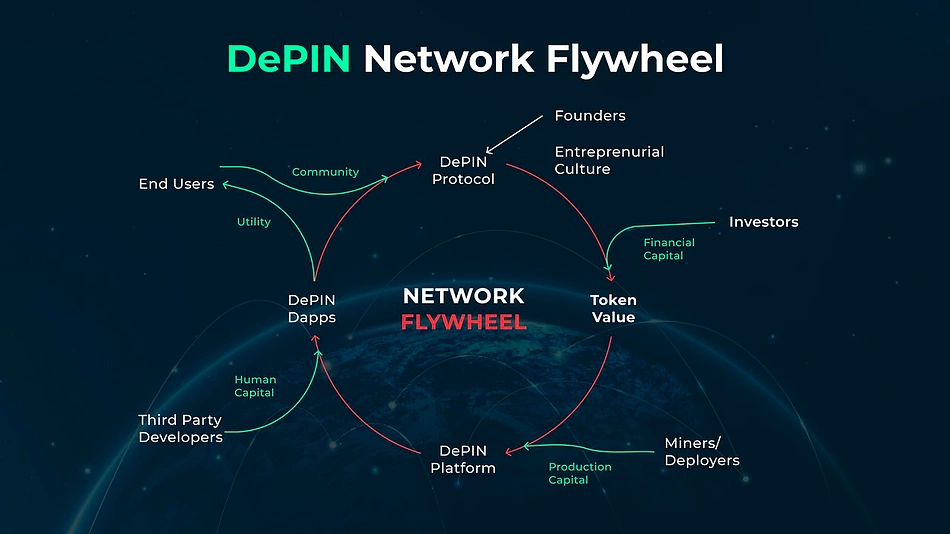
Ensure claims are triggered by tamper-proof oracles. Inaccurate data feeds can cause false payouts or denied legitimate claims. Verify that the protocol uses decentralized oracle networks with fallback mechanisms to prevent single points of failure.

Evaluate the depth of the liquidity pool for capital withdrawal. Thin liquidity can trap funds during market stress. Check historical withdrawal times and slippage rates to ensure capital remains accessible when needed most.
Frequently asked questions about crypto reinsurance
What is the outlook for reinsurance in 2026?
Reinsurance capacity is entering 2026 at record levels, providing a robust foundation for capital markets. Traditional dedicated reinsurance capital stands at approximately USD 540 billion, supplemented by USD 120 billion in insurance-linked securities (ILS). This influx is bolstered by a third consecutive year of robust earnings, suggesting that insurers and reinsurers are well-capitalized. Barring major loss activity, healthy underwriting results are expected across the sector, creating a stable environment for emerging risks like DePIN.
Is there such a thing as crypto insurance?
Crypto insurance exists but operates differently than traditional policies. Swiss Re notes that crypto assets present unique underwriting challenges due to the potential for unexpected losses and the novel nature of digital custody. Coverage typically focuses on custodial risks, smart contract failures, and exchange insolvency rather than market volatility. As the sector matures, specialized reinsurance structures are emerging to backstop these specialized risks, bridging the gap between on-chain capital and traditional risk transfer.
What is the state of crypto in 2026?
The crypto landscape in 2026 is defined by institutional integration and regulatory clarity. Market participants are increasingly relying on on-chain mechanisms for transparency and risk management. The convergence of decentralized physical infrastructure networks (DePIN) with traditional insurance models has created new demand for reinsurance solutions. This shift is driving innovation in how digital assets are valued, secured, and insured, moving the industry away from speculative trading toward sustainable, utility-driven growth.
No comments yet. Be the first to share your thoughts!