
Market capacity and capital deployment
The reinsurance market enters 2026 with record levels of dedicated capital, creating a distinct environment for both traditional and decentralized players. According to A.M. Best’s Global Reinsurance Market Segment Outlook, traditional dedicated reinsurance capital stands at approximately USD 540 billion, supplemented by USD 120 billion in insurance-linked securities (ILS) capital. This substantial baseline is bolstered by a third consecutive year of robust earnings across the sector, providing a deep reservoir of risk-bearing capacity.
Within this broader landscape, blockchain reinsurance platforms have begun deploying significant capital to support 2026 renewals. The decentralized infrastructure platform Re has authorized US$134 million in reinsurance capacity across multiple programs ahead of the January renewal cycle. This deployment highlights the growing integration of crypto-native infrastructure into the primary risk transfer mechanisms that underpin global insurance markets.
While the total addressable market remains dominated by traditional capital, the entry of these digital assets signals a shift in how reinsurance capacity is sourced and managed. The contrast between the $540 billion traditional base and the emerging $134 million digital deployment illustrates the nascent but accelerating adoption of blockchain solutions in high-stakes risk transfer.
Regulatory frameworks and compliance
As reinsurance capacity enters 2026 at record levels, regulatory bodies are tightening the requirements for blockchain-based contracts. The shift toward on-chain transparency is no longer optional; it is a compliance baseline. Traditional opaque ledgers are being replaced by immutable smart contract records that allow regulators to verify risk exposure in real time.
Smart contract audit requirements have become the primary focus for legal oversight. Regulators are demanding that all automated reinsurance agreements undergo rigorous third-party security audits before deployment. These audits verify that the code accurately reflects the legal terms and does not contain vulnerabilities that could lead to unintended payouts or capital loss.
The Reinsurance Association of America and other international bodies are collaborating to standardize these technical requirements. This ensures that digital reinsurance products meet the same solvency and reporting standards as traditional paper-based contracts. The goal is to integrate crypto assets into the mainstream regulatory framework without compromising financial stability.
DeFi Risk Management Strategies
As the reinsurance market enters 2026 with record capacity, the integration of Decentralized Finance (DeFi) mechanisms offers a structural shift in how risk is underwritten and settled. Traditional reinsurance relies on lengthy adjudication periods and opaque claims processing, whereas blockchain-based strategies prioritize transparency and automated execution. This section details the primary mechanisms—parametric insurance and smart contract coverage—that mitigate DeFi risks by replacing subjective assessment with deterministic code.
Parametric Insurance Mechanisms
Parametric insurance removes the need for traditional loss assessment by triggering payouts based on predefined, verifiable data points, known as "triggers." In the context of DeFi, these triggers often rely on oracle networks that feed real-world data, such as price crashes or protocol exploits, directly into smart contracts. This approach significantly reduces settlement time from months to minutes, providing immediate liquidity to affected parties.
The IEEE Xplore study on blockchain-based parametric insurance demonstrates the viability of this model by introducing a proof-of-concept system based on traditional catastrophe bonds. By securitizing risks like bushfires through smart contracts, the system hedges exposure without manual intervention. In the crypto sector, this translates to protocols that automatically stabilize or compensate users when specific on-chain metrics breach established thresholds, thereby minimizing counterparty risk.
Smart Contract Coverage and Collateralization
Smart contract coverage utilizes decentralized liquidity pools to underwrite specific risks, such as protocol hacks or governance failures. Unlike traditional policies where capital is held by a reinsurer, DeFi coverage often requires users to deposit collateral into a smart contract to purchase protection. This creates a direct alignment of incentives, as the pool’s solvency depends on the accuracy of the risk pricing and the behavior of the participants.
The integration of digital assets as collateral further reshapes these balance sheets. As noted by industry leaders like Jeff Walton, CRO at Strive, digital assets could fundamentally alter reinsurance capital strategies, allowing for more efficient use of collateral and faster capital deployment. This shift enables a more liquid reinsurance market where capital can be deployed and withdrawn dynamically based on real-time risk exposure, a stark contrast to the static capital models of traditional reinsurers.
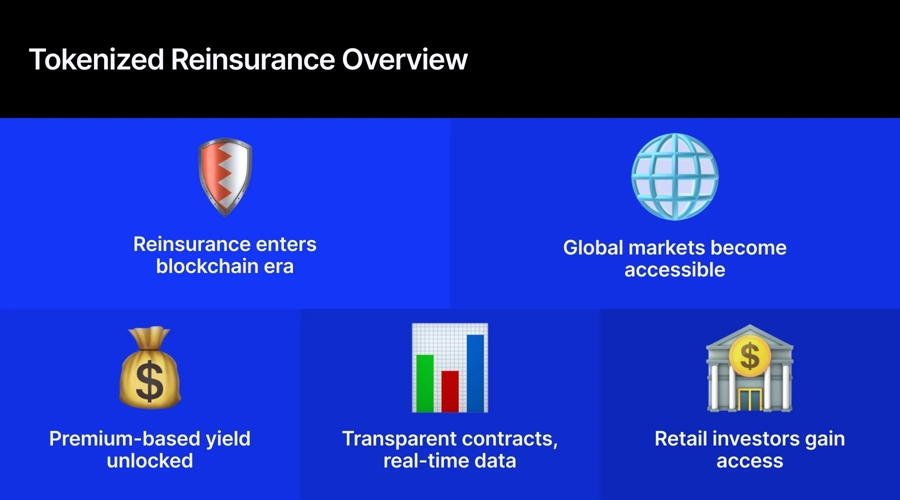
Comparison of Reinsurance Models
The following table compares the operational characteristics of traditional reinsurance against emerging blockchain-based models, highlighting the efficiency gains in transparency, speed, and cost structure.
| Feature | Traditional Reinsurance | Blockchain-Based Reinsurance |
|---|---|---|
| Claims Settlement | Months (adjudication-heavy) | Minutes (automated triggers) |
| Transparency | Limited (private ledgers) | Full (public verification) |
| Capital Efficiency | Low (static reserves) | High (dynamic liquidity pools) |
| Cost Structure | High (intermediaries) | Lower (smart contract fees) |
Asset Protection and Collateral Models
The integration of digital assets into reinsurance capital structures represents a structural shift in how risk is backed and collateralized. Industry experts are increasingly examining the use of Bitcoin as a primary collateral asset, moving beyond traditional fiat and sovereign debt instruments. This trend addresses the growing demand for efficient, liquid capital solutions in a market where traditional capacity is becoming more expensive.
Jeff Walton, Chief Risk Officer at Strive, has highlighted the potential for digital assets to reshape reinsurance balance sheets. In discussions regarding collateral strategies, Walton noted that Bitcoin offers unique liquidity characteristics that can optimize capital efficiency for reinsurers. The adoption of such assets allows for faster settlement cycles and reduced counterparty risk compared to traditional collateral arrangements.
"Bitcoin as collateral? Reinsurance's capital shake-up."
The market is already responding to this shift. Decentralized reinsurance infrastructure platforms are authorizing significant capacity backed by these new models. For instance, the platform Re recently authorized $134 million in reinsurance capacity across multiple programs ahead of 2026 renewals, signaling institutional confidence in blockchain-based collateral mechanisms.
No comments yet. Be the first to share your thoughts!