
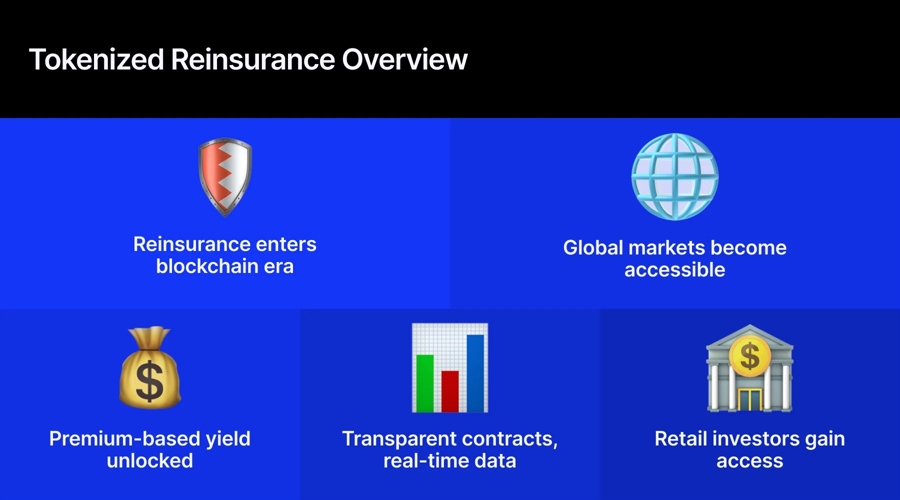
Crypto reinsurance 2026 limits to account for
The reinsurance market enters 2026 with record capacity, but the path for crypto-native coverage remains distinct. Traditional dedicated reinsurance capital stands at approximately $540 billion, supplemented by $120 billion in insurance-linked securities (ILS). This deep pool of capital has bolstered earnings for a third consecutive year, signaling a stable environment for traditional risks. However, crypto reinsurance operates in a parallel track, where speed and programmability matter more than legacy scale.
For DeFi protocols, the primary constraint is not capital availability but the alignment of risk models with on-chain volatility. While Fitch Ratings notes that the global insurance sector outlook remains neutral, certain non-life segments are edging toward a deteriorating outlook due to softer pricing cycles. This divergence highlights the urgency for parametric solutions that can bypass traditional adjudication delays. In 2026, the focus shifts from merely accessing capital to structuring it for immediate, algorithmic settlement.
Platforms like Re are already responding by authorizing $134 million in new capacity for 2026 renewals. This move underscores a growing institutional appetite for blockchain-based reinsurance, yet the sector still faces hurdles in standardizing oracle reliability and legal enforceability. The 2026 landscape is defined by this tension: abundant traditional capital is waiting, but crypto protocols must build the technical infrastructure to access it efficiently. The winners will be those who treat reinsurance not as a back-office function, but as a core, programmable layer of DeFi risk management.
Crypto reinsurance 2026 choices that change the plan
The 2026 crypto reinsurance landscape is defined by a specific tension: the speed of blockchain execution versus the traditional rigor of capital adequacy. As decentralized platforms like Re authorize $134 million in capacity for renewals, they are challenging legacy models that rely on slower, manual settlement processes. However, this shift introduces distinct tradeoffs that risk managers must evaluate before deploying capital.
When comparing these new parametric structures against traditional reinsurance, the primary differentiator is not just cost, but the mechanism of trust. Traditional reinsurance depends heavily on the creditworthiness of the reinsurer, a factor that Fitch Ratings recently flagged as deteriorating for certain non-life segments due to softer pricing cycles. In contrast, crypto reinsurance leverages smart contracts to automate payouts based on verified data oracles, reducing counterparty risk but introducing new technical vulnerabilities.
To navigate this shift, you need to weigh liquidity, transparency, and regulatory alignment. The following comparison breaks down the concrete factors that determine whether a crypto reinsurance solution fits your risk profile.
| Tradeoff Factor | Traditional Reinsurance | Crypto Parametric | 2026 Impact |
|---|---|---|---|
| Settlement Speed | 30-90 days | Seconds to minutes | Capital efficiency improves significantly with parametric triggers. |
| Capital Lock-up | High (collateral required) | Low (liquid tokens) | DeFi protocols can deploy idle capital more flexibly. |
| Transparency | Limited (private ledgers) | Full (on-chain audits) | Regulatory scrutiny increases for opaque traditional structures. |
| Counterparty Risk | High (insurer solvency) | Medium (smart contract bugs) | Code audits become as critical as credit ratings. |
| Regulatory Status | Established global framework | Evolving jurisdictional rules | Compliance costs may rise as frameworks solidify. |
The data above highlights that while crypto reinsurance offers superior liquidity and speed, it demands a higher level of technical diligence. Traditional reinsurance remains safer for large, complex risks where legal precedent matters, but it suffers from slow capital turnover. For 2026, the most robust strategies often combine both: using traditional reinsurance for tail risks and parametric crypto structures for frequent, smaller losses.
As the reinsurance market outlook for 2026 points to record capacity levels, the integration of these systems is accelerating. Understanding these tradeoffs is essential for allocating capital effectively in a market where speed and transparency are becoming the new standards of trust.
How to choose a crypto reinsurance partner for 2026
The 2026 reinsurance market is entering a period of record capacity, with traditional dedicated capital reaching approximately $540 billion and insurance-linked securities (ILS) adding another $120 billion. This influx of capital is bolstered by a third consecutive year of robust earnings, creating a favorable environment for DeFi protocols seeking to layer risk management on top of their yield strategies.
However, this abundance of capital comes with a caveat. Fitch Ratings has noted that while the global insurance sector outlook remains neutral, certain non-life segments are edging closer to a "deteriorating" outlook due to softer pricing cycles. For crypto projects, this means that not all reinsurance capacity is created equal. Choosing a partner requires a disciplined framework that prioritizes liquidity, transparency, and smart contract auditability over simple capacity numbers.
Evaluate on-chain liquidity and capital deployment
Traditional reinsurance often involves complex legal structures and delayed payouts. In the crypto space, look for platforms that have already demonstrated the ability to deploy capital on-chain. For example, the decentralized reinsurance infrastructure platform Re recently authorized $134 million in capacity for 2026 renewals, signaling a shift toward automated, transparent capital allocation. Prioritize partners who have live, audited contracts rather than those promising future integrations.
Verify the quality of risk modeling
Parametric coverage relies on accurate data oracles. A partner’s value is determined by how they model tail risks, such as smart contract exploits or extreme market volatility. Avoid providers who rely solely on generic market indices. Instead, look for those that integrate granular data from multiple sources and have a clear process for adjusting coverage triggers based on real-time network conditions.
Check for regulatory alignment and transparency
As the market matures, regulatory scrutiny will intensify. Choose partners who are proactive about compliance and offer transparent reporting on their capital reserves and claim histories. This transparency not only mitigates regulatory risk but also builds trust with your users and investors. In a market where trust is the primary asset, a partner’s willingness to operate in the open is a strong indicator of long-term viability.
Spotting Weak Options in 2026 Crypto Reinsurance
The rush to deploy AI-driven parametric coverage has introduced several weak options that can undermine risk management. While the 2026 market outlook shows record capacity, not all decentralized solutions offer genuine resilience. Before committing capital, you must distinguish between robust infrastructure and superficial implementations.
Ignoring Smart Contract Audit Trails
Many platforms claim "AI-driven" security, but the underlying code often lacks rigorous, recent audits. Parametric triggers rely on immutable data; if the contract executing the payout is vulnerable, the coverage is worthless. Always verify that the smart contract has undergone multiple independent audits within the last six months, specifically looking for vulnerability reports related to oracle manipulation.
Overreliance on Single Oracle Sources
AI models require high-quality data, but many crypto reinsurance protocols depend on a single oracle provider for parametric triggers. If that oracle fails or is manipulated, the entire coverage mechanism breaks. Look for solutions that aggregate data from multiple, independent sources. This redundancy ensures that a single point of failure does not invalidate the parametric trigger, protecting your capital during market volatility.
Vague Trigger Definitions
Some weak options use ambiguous definitions for parametric triggers, such as "significant market drop" without specifying the index or threshold. This ambiguity allows for disputes and delays in payouts. Effective coverage must define triggers with mathematical precision, specifying the exact index, time window, and threshold percentage. Clear definitions ensure that AI-driven payouts are automatic and indisputable, which is the core value proposition of parametric insurance.
Misaligned Capital Allocation
While total reinsurance capacity is projected to reach USD 540 billion in 2026, some platforms allocate capital inefficiently. They may over-concentrate on low-risk, low-yield assets while neglecting the high-volatility segments that need coverage most. Check how the platform balances its capital stack. A healthy protocol allocates sufficient capital to cover tail risks, ensuring that parametric payouts are fully backed even during extreme market events.
No comments yet. Be the first to share your thoughts!