
Crypto reinsurance 2026 limits to account for
The 2026 reinsurance market is defined by a split between traditional capacity and emerging digital infrastructure. While the January 1 renewal cycle saw standard property reinsurance rates fall by 10% to 20%, the landscape for digital assets remains distinct and constrained by volatility.
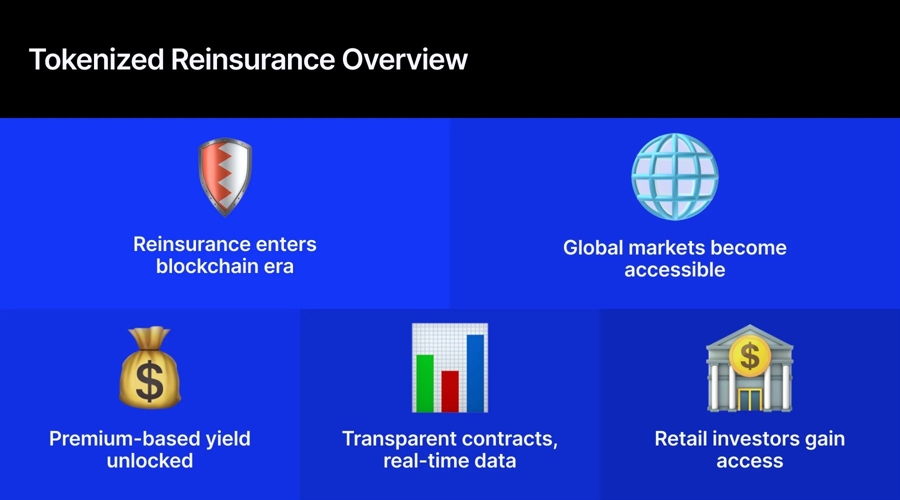
Decentralized platforms are moving quickly to fill gaps left by traditional carriers. For example, blockchain reinsurance platform Re has authorized US$134 million in capacity ahead of 2026 renewals, signaling a shift toward parametric models that settle claims automatically based on verified data oracles rather than manual assessments.
This growth is part of a broader industry conversation. The upcoming Re/insurance Outlook Europe 2026 conference in Zurich will gather over 200 leaders to address these emerging risks and alternative capital strategies. The focus is no longer just on coverage availability, but on how AI-driven parametric models can mitigate risk in real-time.
Unlike traditional insurance, which often excludes crypto assets due to their speculative nature, these new models are designed specifically for digital risk. They offer a way for insurers to participate in the crypto market without exposing themselves to the same liquidity risks that deterred early adopters.
Crypto reinsurance 2026 choices that change the plan
Choosing a crypto reinsurance solution in 2026 requires balancing speed against certainty. Traditional reinsurers offer regulatory comfort but slow settlement cycles. Decentralized platforms like Re provide instant parametric payouts but demand strict smart contract auditing. You must evaluate which risk profile aligns with your treasury’s tolerance for counterparty risk.
Key Evaluation Factors
| Feature | Traditional Reinsurer | Decentralized Platform |
|---|---|---|
| Settlement Speed | 30-90 days | Instant (on-chain) |
| Regulatory Status | Fully licensed | Emerging/Gray area |
| Capital Efficiency | Low (high collateral) | High (leveraged pools) |
| Transparency | Quarterly reports | Real-time on-chain |
| Counterparty Risk | Low (AAA rated) | Medium (smart contract) |
Traditional carriers provide stability but lack the liquidity to respond to crypto-specific volatility. Decentralized platforms solve for speed but introduce technical risk. Your choice depends on whether you prioritize regulatory compliance or immediate capital access.
The January 2026 renewal cycle saw property reinsurance rates fall between 10% and 20%, creating a favorable entry point for hybrid models. Insurers are increasingly using blockchain to layer parametric coverage on top of traditional treaties. This approach captures the best of both worlds: regulatory safety and automated claims.
Build a decision framework for 2026 risk mitigation
The 2026 renewal cycle introduces a split path for risk management: traditional reinsurance markets are softening, with property rates falling 10–20% for non-loss accounts, while crypto-specific exposure requires decentralized infrastructure. You need a framework that separates these two distinct risk pools. Treating a blockchain smart contract vulnerability with standard property reinsurance terms will leave you exposed to gaps that only parametric models can fill.
Start by auditing your current policy language. Traditional carriers often exclude "digital asset" losses or define them narrowly. If your portfolio includes significant crypto holdings, you must verify whether your reinsurance treaty covers direct market volatility or only custodial failure. The January 2026 market shift offers a window to renegotiate terms, but only if you can clearly demonstrate the separation between physical asset risk and digital ledger risk.
Evaluate parametric triggers for your crypto exposure. Unlike traditional indemnity models that require proof of loss after an event, parametric contracts pay out automatically when a predefined condition is met, such as a specific oracle price drop or a confirmed blockchain hack. This speed is critical in crypto markets where liquidity can vanish in minutes. Look for platforms that have already authorized significant capacity for 2026, ensuring there is actual capital backing these automated triggers.
Finally, align your capital allocation with the new market reality. With traditional reinsurance rates dropping, you may have more budget to allocate toward specialized crypto insurance products. However, remember that crypto insurance is not a monolith. It covers specific risks like cyberattacks and private key loss, which are fundamentally different from the market risks insurers typically hedge. Use this framework to ensure every dollar of reinsurance capacity is matched to the correct risk type, avoiding the common pitfall of over-insuring traditional assets while under-insuring digital ones.

Review your current treaty wording for "digital asset" definitions. Identify any clauses that exclude smart contract failures or oracle manipulation, which are common in 2026 crypto-specific incidents.

Create distinct hedging strategies for physical property and digital assets. Use traditional reinsurance for the former and parametric contracts for the latter, ensuring no cross-contamination of risk models.

Work with providers like Re to set automated payout conditions based on real-time blockchain data. This ensures immediate liquidity during crypto market crashes, bypassing lengthy traditional claims processes.
With traditional rates falling 10–20%, shift saved capital toward specialized crypto insurance products. Focus on covering cyberattacks and private key loss, which remain high-cost and high-impact risks.
Spotting the Weak Links in 2026 Crypto Reinsurance
The 2026 reinsurance renewal cycle has brought a sharp correction to rates, with property premiums falling 10% to 20% for non-loss-impacted accounts. Aon’s market outlook confirms this softening, but it also exposes the fragility of unproven crypto reinsurance models. While platforms like Re have authorized $134 million in new capacity, investors must look past the headline numbers to find sustainable risk mitigation.
The Volatility Trap
Traditional insurers face extreme difficulty integrating crypto assets into their balance sheets. The NAIC notes that cryptocurrencies remain atypical investments due to speculative nature and price swings. Parametric models promise speed, but they often fail to account for the "latency of truth"—the gap between a blockchain event and its settlement. If the oracle data is delayed or manipulated, the parametric payout triggers incorrectly, leaving the ceding company exposed to the very risk it tried to hedge.
Liquidity Mismatch
Many crypto reinsurance solutions rely on stablecoins or illiquid governance tokens to back reserves. In a hard market, these assets can decouple from their pegs or suffer from low trading volume. Traditional reinsurance uses rated capital that is universally accepted. Crypto-backed capacity often lacks the same regulatory oversight, creating a liquidity mismatch when claims need to be paid quickly. Always check the reserve composition before committing capital.
Regulatory Uncertainty
The lack of standardized accounting for crypto reinsurance reserves remains a significant hurdle. Unlike traditional reinsurance, which follows GAAP or IFRS standards, crypto-based contracts often operate in a gray area. This ambiguity can lead to capital charge penalties for insurers who hold crypto reinsurance assets. Before adopting these models, verify that the platform complies with local insurance regulations and can provide auditable proof of reserves.
Crypto reinsurance 2026: what to check next
The 2026 crypto reinsurance landscape is shifting rapidly as AI-driven parametric models mature. Before committing capital, it helps to understand the current market mechanics and regulatory boundaries.
These answers highlight the tension between traditional risk aversion and the new efficiency offered by blockchain-based reinsurance platforms.
No comments yet. Be the first to share your thoughts!