

Crypto reinsurance 2026 limits to account for
Use this section to make the The Crypto Reinsurance Boom decision easier to compare in real life, not just on paper. Start with the reader's actual constraint, then separate must-have requirements from details that are merely nice to have. A practical choice should survive normal use, maintenance, timing, and budget. If a recommendation only works in an ideal situation, call that out plainly and give the reader a fallback path.
The simplest way to use this section is to write down the must-have criteria first, then compare each option against those criteria before weighing nice-to-have features.
Crypto reinsurance 2026 choices that change the plan
The 2026 reinsurance boom is not just about volume; it is about how decentralized infrastructure handles risk. Platforms like Re Protocol are authorizing significant capacity—$134 million in recent programs—to bridge traditional reinsurance markets with blockchain liquidity [src-serp-1]. However, integrating these systems introduces specific tradeoffs that investors and protocols must evaluate.
When comparing crypto reinsurance models, you are balancing speed and transparency against regulatory compliance and capital efficiency. The following comparison breaks down the core factors defining this market shift.
| Factor | On-Chain Reinsurance | Traditional Reinsurance | Hybrid Models |
|---|---|---|---|
| Capital Efficiency | Instant settlement via smart contracts reduces float time | Slow settlement cycles (monthly/quarterly) tie up capital | Balances speed with legacy compliance requirements |
| Transparency | Real-time, on-chain proof of reserves and claims | Periodic audits and opaque reporting structures | Public data for on-chain portion, private for legacy |
| Regulatory Access | Limited by jurisdiction; faces compliance hurdles | Full access to licensed global markets | Uses licensed insurers to channel stablecoin capital |
| Risk Modeling | AI-driven, real-time data feeds | Historical data, actuarial tables | Combines AI speed with human oversight |
The shift toward hybrid models suggests that pure on-chain solutions may face regulatory friction. By channeling stablecoin capital through licensed insurers, projects can maintain transparency while accessing broader capital pools [src-serp-4]. This approach addresses the "will crypto ever be insured?" question by proving that crypto assets can be covered, provided the infrastructure meets traditional standards [src-serp-2].
As global reinsurance capital reaches record highs, the integration of AI and DePIN offers a path to scalable stability. The tradeoff is clear: you gain efficiency and transparency by accepting the complexity of hybrid regulatory frameworks.
How to evaluate crypto reinsurance models
The 2026 reinsurance boom is not just about capital; it is about underwriting precision. Platforms like Re Protocol are moving beyond simple tokenized insurance by integrating DePIN infrastructure and AI-driven risk modeling. To evaluate these models, you need to look past the token price and examine the mechanics of risk transfer.
Here is a practical framework for assessing the viability of crypto reinsurance solutions.
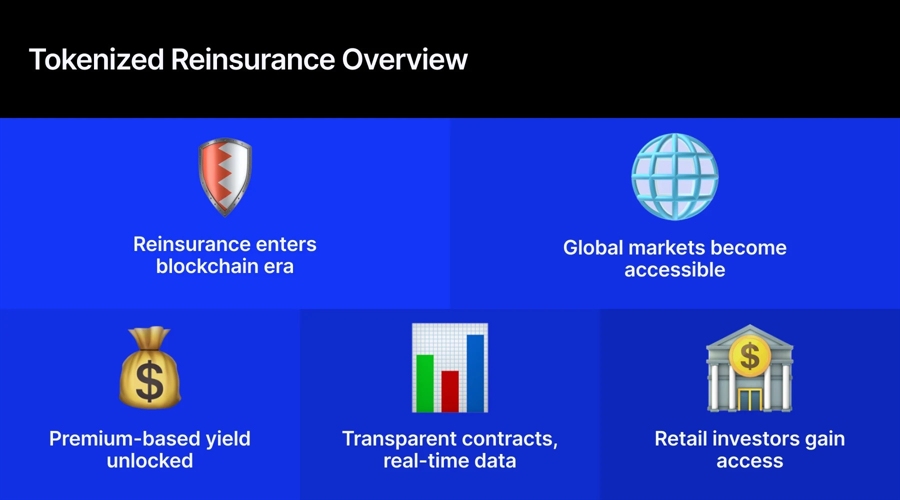
Traditional reinsurance relies on trust and legal contracts. Crypto reinsurance relies on code. Check if the platform uses fully collateralized smart contracts. The capital backing the reinsurance should be locked on-chain, ensuring that claims are paid automatically without counterparty risk. If the collateral is not transparent or liquid, the model is flawed.

AI-driven risk modeling is the engine of this sector. Look for platforms that use real-time data feeds from DePIN networks to adjust premiums dynamically. Static models fail in crypto because volatility changes minute by minute. The best models use historical on-chain data and live oracle inputs to predict risk exposure, ensuring that the reinsurance capacity matches the actual risk profile of the underlying assets.

Even in decentralized systems, legal wrappers matter. Platforms like Re Protocol integrate customary reinsurance markets with blockchain technology by partnering with licensed insurers. This hybrid approach provides a legal safety net for institutional capital. Ensure the platform has clear partnerships with regulated entities to handle claims disputes and ensure compliance with global insurance standards.
Capital efficiency determines whether the reinsurance market can scale. Look for platforms that allow for fractional ownership of reinsurance contracts. This enables smaller investors to participate and increases the overall liquidity of the market. High liquidity ensures that capital can be deployed quickly to cover emerging risks, such as a major smart contract exploit or a stablecoin depegging event.
By focusing on these four areas, you can cut through the noise and identify which crypto reinsurance models are built for long-term stability rather than short-term speculation.
Watch for misleading claims and weak options
The 2026 reinsurance boom attracts capital, but it also invites noise. Re Protocol recently authorized $134 million in capacity, signaling real on-chain growth, yet not every project backing this narrative holds up to scrutiny. Investors often confuse governance tokens with actual risk transfer mechanisms, leading to misplaced confidence in platforms that lack licensed insurance partners or transparent collateralization.
"Guaranteed" stablecoin yields
Several projects market stablecoin-backed reinsurance as a risk-free yield source. This is a false equivalence. Reinsurance capital is exposed to underwriting losses, smart contract risks, and liquidity mismatches. If a platform promises fixed, high returns without detailing its loss reserves or actuarial models, it is likely misrepresenting the risk profile. Always verify if the capital is fully collateralized and if the underlying contracts are legally enforceable.
Unverified AI risk models
AI-driven risk modeling is a key selling point for many new entrants, but the technology is only as good as its data. Some platforms claim "proprietary AI" without publishing their training datasets or back-testing results. Without transparent data sources, these models can produce false positives or miss systemic risks. Look for projects that disclose their data partners and allow independent verification of their risk assessments.
Opaque governance structures
Re Protocol’s token, RE, drives governance, but vague tokenomics can lead to centralization risks. Some projects concentrate voting power in the hands of a few early investors or developers, undermining the decentralized ethos. Check the distribution schedule and voting thresholds. If a small group can override risk parameters or pause contracts, the platform’s stability is vulnerable to internal decisions rather than market forces.
Crypto reinsurance 2026: what to check next
The intersection of decentralized finance and traditional risk transfer is moving fast. Here are direct answers to the most common questions about the 2026 reinsurance boom, stablecoin integration, and market dynamics.
These answers reflect the current state of the market, where traditional actuarial models meet on-chain transparency. The rapid adoption of these mechanisms suggests a structural shift in how digital assets are protected.
No comments yet. Be the first to share your thoughts!