
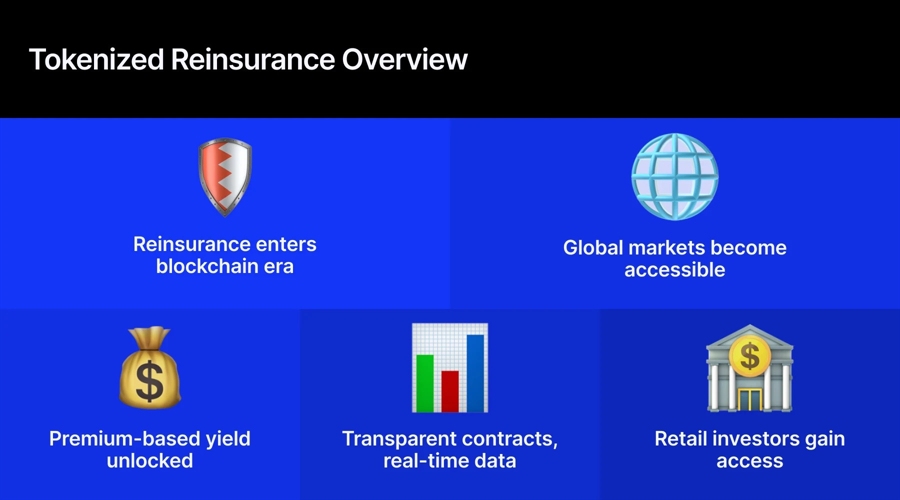
Tokenized capacity hits $134 million
Use this section to make the Crypto Reinsurance decision easier to compare in real life, not just on paper. Start with the reader's actual constraint, then separate must-have requirements from details that are merely nice to have. A practical choice should survive normal use, maintenance, timing, and budget. If a recommendation only works in an ideal situation, call that out plainly and give the reader a fallback path.
The simplest way to use this section is to write down the must-have criteria first, then compare each option against those criteria before weighing nice-to-have features.
AI models replace static actuarial tables
The transition from static actuarial tables to AI-driven risk modeling marks the most significant structural shift in crypto reinsurance 2026. Traditional reinsurance relied on historical lag—using past loss data to predict future exposure. In the crypto ecosystem, where smart contract vulnerabilities can emerge overnight and protocol solvency can evaporate in minutes, that historical approach is no longer viable. Static models cannot account for the velocity of onchain exploits or the complex interdependencies of DeFi protocols.
AI models solve this by processing real-time onchain data. Instead of waiting for quarterly reports, these systems continuously monitor smart contract code, liquidity pools, and transaction patterns. This allows for the immediate assessment of protocol health and the identification of vulnerabilities before they are exploited. The result is a dynamic risk assessment that mirrors the actual state of the network, rather than a delayed snapshot of its past performance.
This shift enables more precise capital allocation for reinsurance providers. By understanding the live risk profile of a protocol, insurers can price coverage more accurately and adjust reserves in response to changing market conditions. It transforms reinsurance from a passive backstop into an active risk management tool, ensuring that capital is available when it is needed most. As the crypto market matures, the integration of AI-driven modeling will likely become the standard for credible solvency assurance.
Traditional carriers enter the onchain treaty
The integration of legacy reinsurance entities with blockchain protocols marks a structural shift in how crypto reinsurance 2026 capital is deployed. Traditional carriers are no longer observing from the sidelines; they are actively partnering with onchain infrastructure to bridge the gap between regulated solvency requirements and the liquidity demands of decentralized finance. This alliance ensures that capital remains compliant while achieving the speed and transparency inherent to distributed ledger technology.
Leading platforms like Re have already authorized significant capacity for upcoming renewals, signaling that institutional confidence is translating into tangible onchain treaties. By securing strategic investments from major financial entities, these protocols are validating the model of tokenized reinsurance as a viable conduit for real-world capital. The result is a hybrid ecosystem where traditional risk assessment meets automated settlement.
The following comparison illustrates the operational differences between legacy treaty structures and modern tokenized onchain programs. This distinction highlights why carriers are adopting these new frameworks to maintain competitive relevance in the crypto insurance sector.
| Feature | Traditional Treaty | Tokenized Program |
|---|---|---|
| Settlement Speed | Monthly/Quarterly | Real-time/Instant |
| Capital Access | Restricted by jurisdiction | Global liquidity pools |
| Transparency | Private bilateral reports | Public onchain ledger |
| Compliance | Manual KYC/AML | Programmable smart contracts |
As these treaties mature, the distinction between "crypto" and "traditional" insurance will likely blur. The primary advantage lies in the ability to access global capital markets instantly, reducing the friction that has historically stifled crypto risk transfer. For carriers, this represents not just a technological upgrade, but a fundamental expansion of their underwriting universe.
Solvency coverage for high-stakes protocols
Protocols managing billions in total value locked (TVL) operate with a margin for error that is virtually zero. When market volatility spikes, liquidity can evaporate in seconds, turning a healthy balance sheet into a solvency crisis. This is where crypto reinsurance 2026 strategies become critical infrastructure rather than optional hedging. By transferring tail-risk exposure to traditional capital markets, high-stakes DeFi protocols can maintain operational continuity even when onchain liquidity dries up.
The mechanism works by backstopping protocol treasuries against extreme downside scenarios. Instead of relying solely on internal reserves that may be correlated with the falling asset, protocols purchase coverage from specialized reinsurance pools. This capital acts as a shock absorber, ensuring that smart contract vulnerabilities or oracle failures do not result in permanent insolvency. The result is a more resilient financial architecture that can withstand black swan events without collapsing the broader ecosystem.
Market context remains volatile, and protocol risk models must account for this reality. The following chart illustrates the current market sentiment, which directly influences the pricing and availability of reinsurance capital.
Integrating this capital requires rigorous due diligence and transparent reporting. Protocols must demonstrate robust risk management practices to access favorable terms from traditional insurers. As the industry matures, the convergence of onchain data and offchain solvency standards will define the next generation of decentralized finance stability.
FAQ on crypto insurance costs and predictions
As the market stabilizes, questions about the financial mechanics of crypto reinsurance 2026 have shifted from speculative to operational. The cost of coverage is no longer a theoretical exercise but a tangible line item for institutions managing onchain capital. Below are the most common queries regarding premiums and market outlooks.
No comments yet. Be the first to share your thoughts!